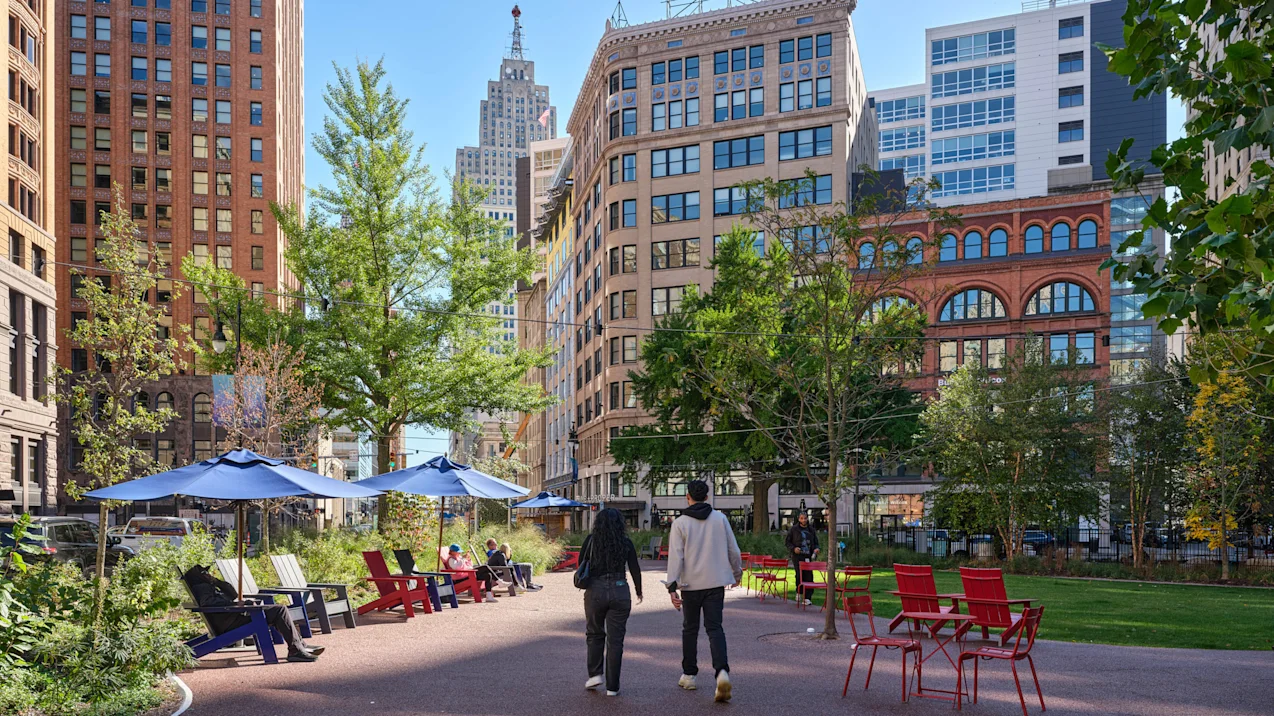
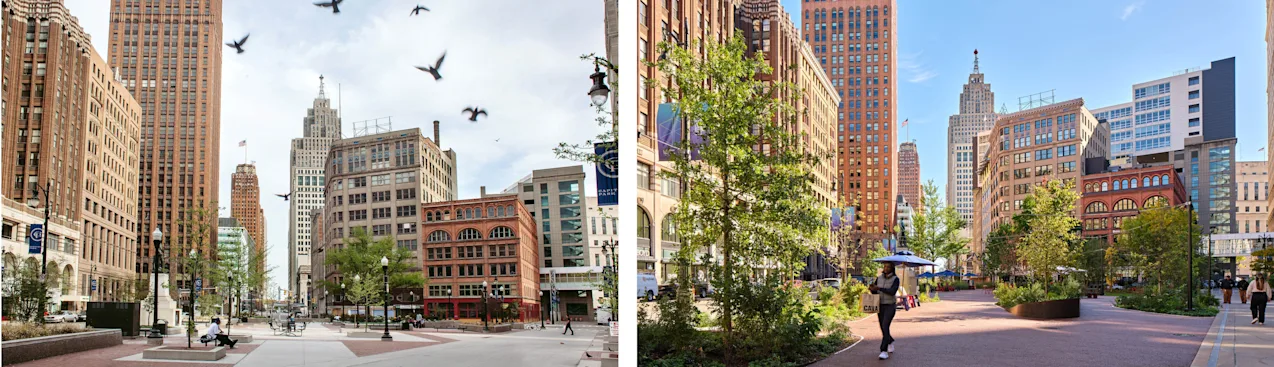
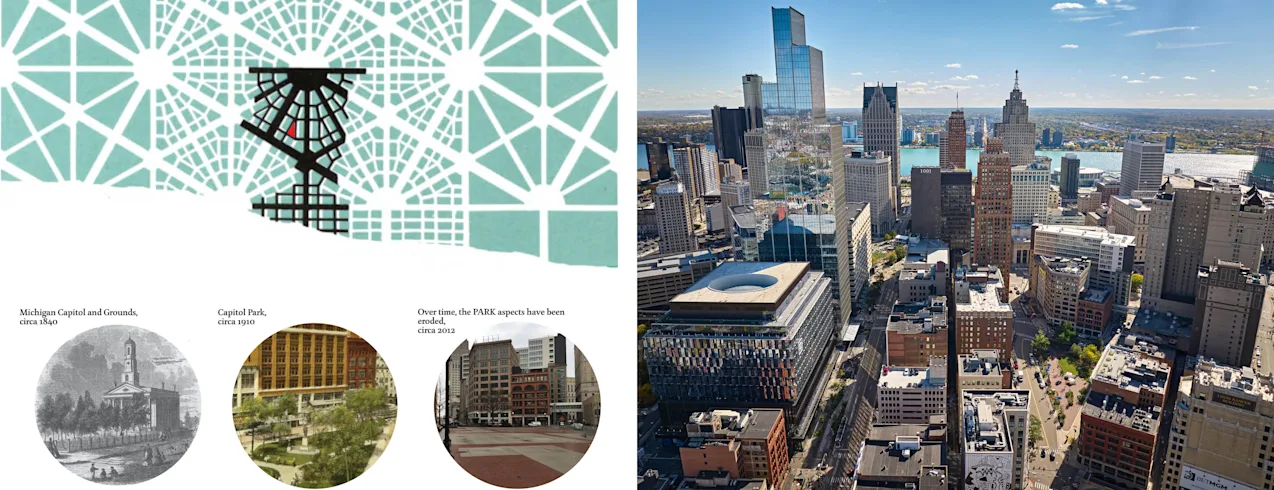
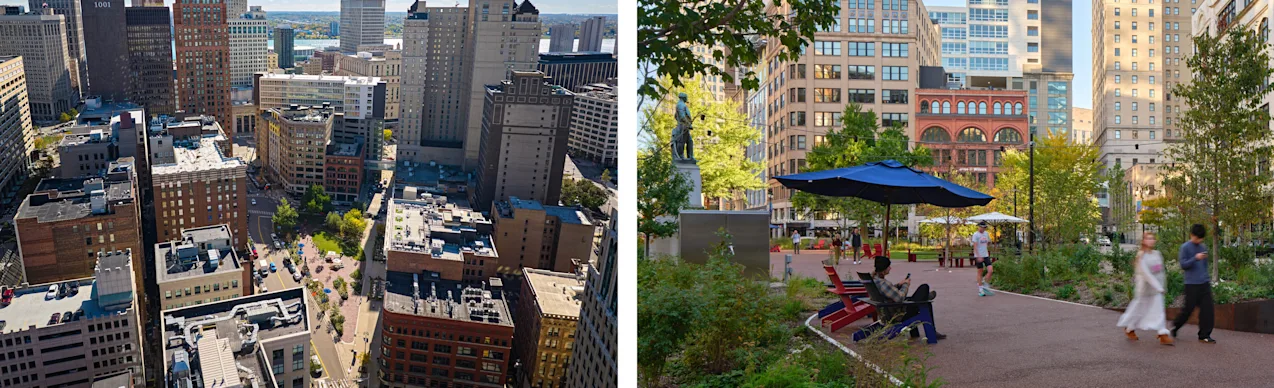
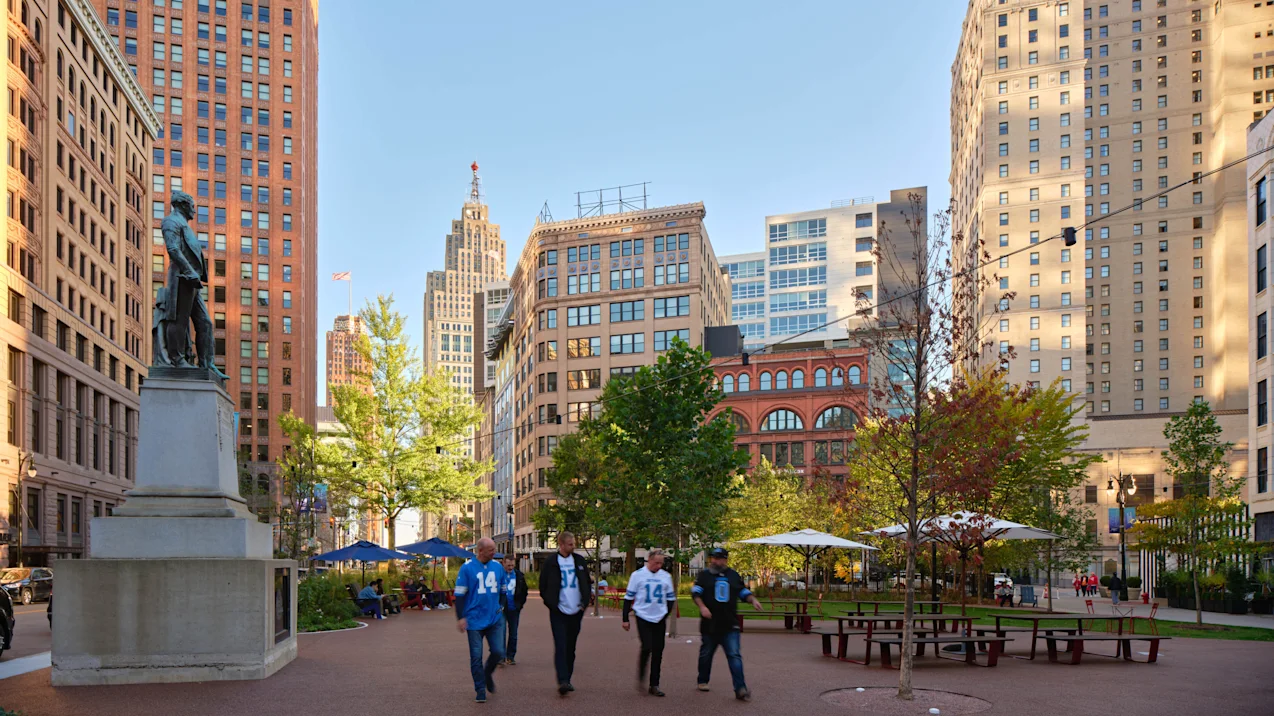
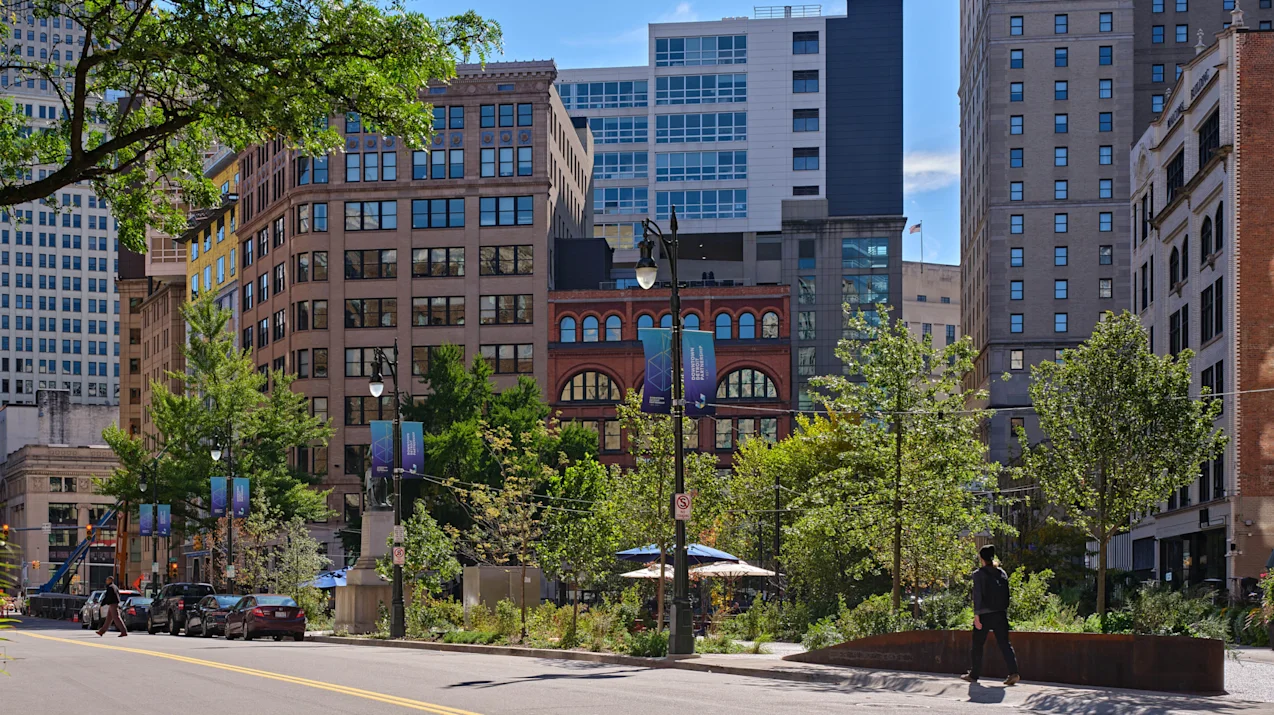
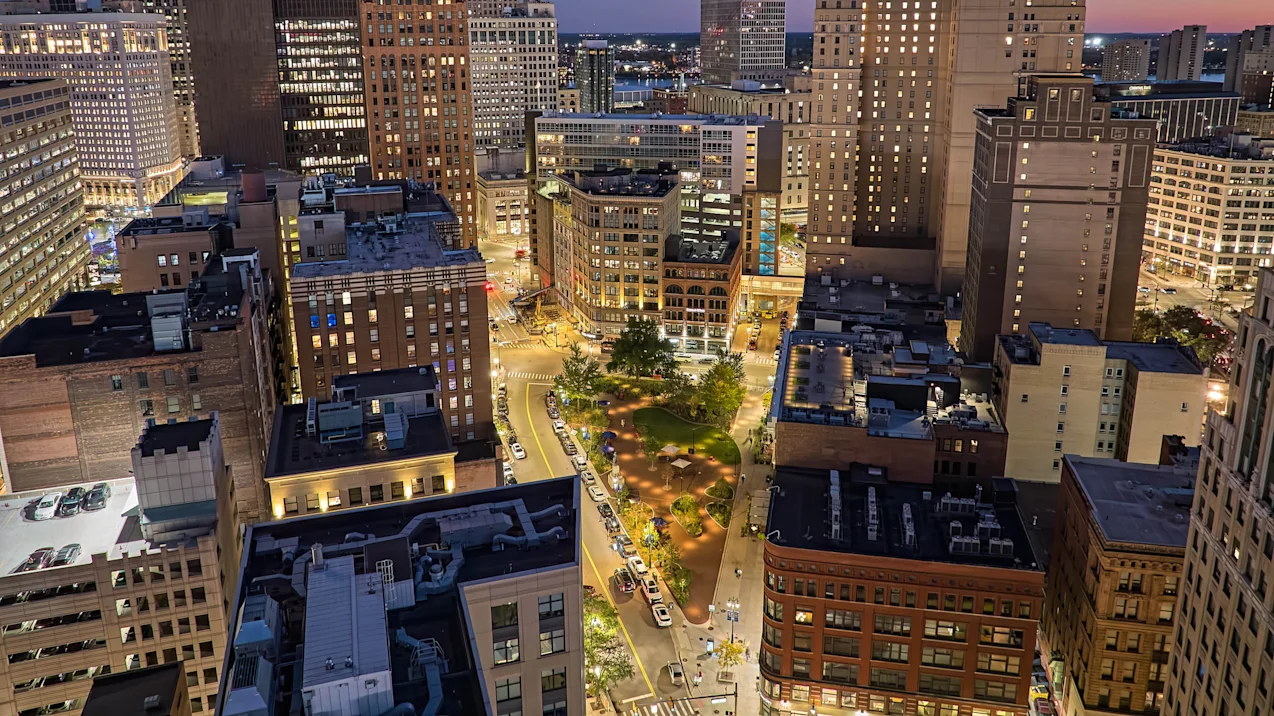
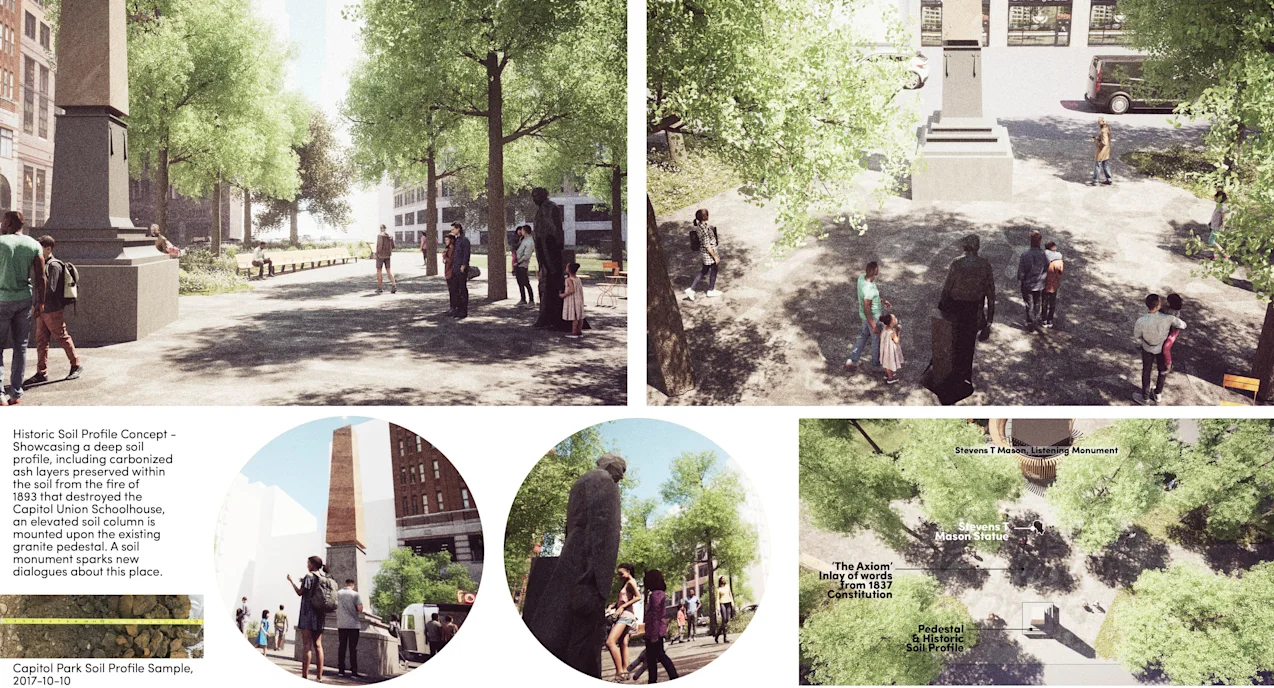
PUBLIC WORK was engaged to refresh and re-activate this significant public space in Detroit’s historic downtown district. Through rigorous stakeholder and community engagement, a concept emerged that recognizes and celebrates the park’s past while reinterpreting it through a contemporary lens on Detroit life. This was a strategic opportunity to replace hard surfaces with permeable, sustainable materials and native vegetation — restoring a park environment that creates an immersive green atmosphere while enhancing the district’s urban vibrancy with flexible spaces for thoughtful programming.
The park’s tree canopy is returned with a distinctive bosque of trees, rising in height toward the Detroit River and creating a greenspace capable of hosting diverse civic and community events while also offering a tranquil retreat for a growing downtown residential population. The adaptive landscape features Carolinian Forest species and supports biodiversity, mitigates climate impacts, improves air quality, and manages stormwater.
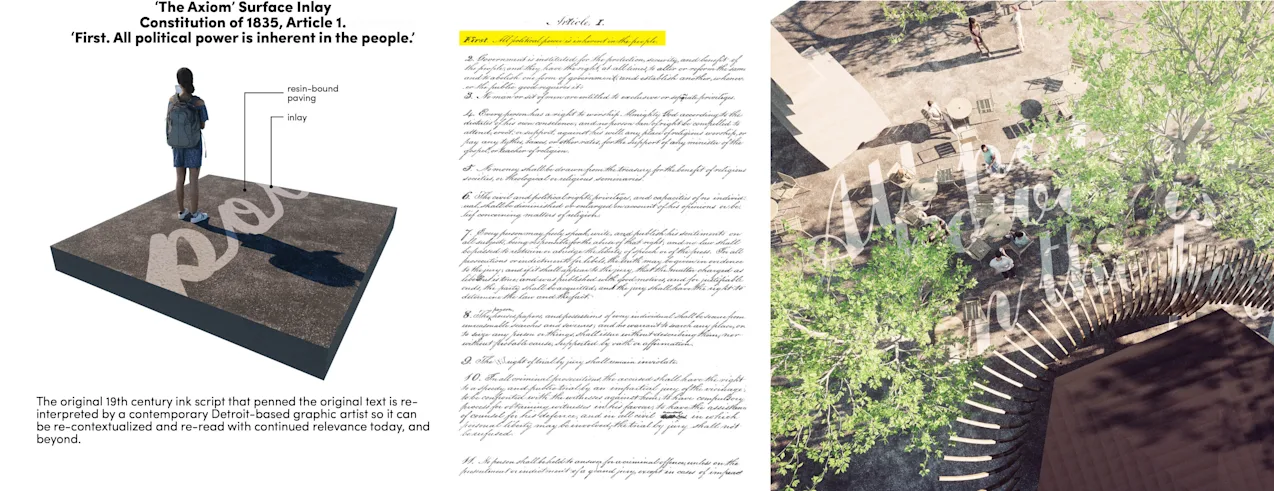
The park vision establishes a framework of elements that will be layered over time. With phase one of the foundational park design now complete—including a porous ground paving system, renewed tree canopy, catenary lighting, an event lawn, and a dog relief area—additional layers of activation (a food and beverage kiosk with public washrooms), interpretation (ground-plane art installations), and reinterpretation (programming and events) will be introduced sequentially to foster an ongoing dialogue about Detroit’s future.