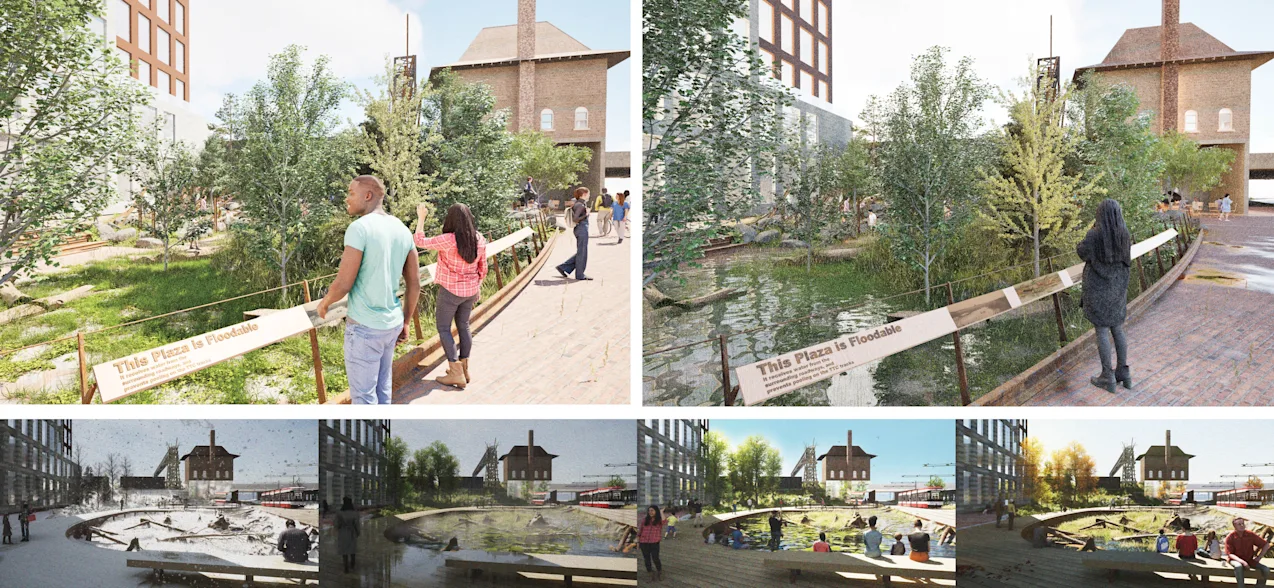
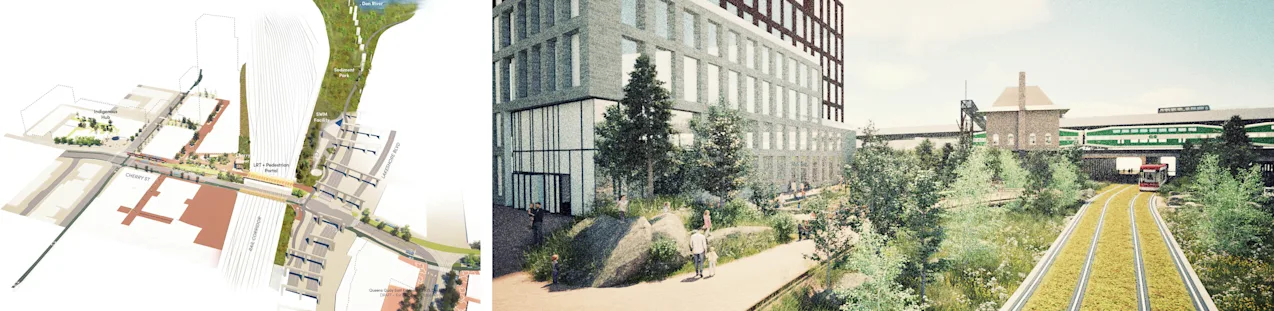
Located at one of Toronto’s topographic low points, the intersection of Cherry Street and Lake Shore Boulevard experiences frequent flooding. Historically, this area was part of Ashbridges Marsh and was once composed of shallow, reed-filled inlets before it was gradually infilled to support Toronto’s industrial growth in the 20th century. Although recent revitalization efforts at The Distillery District introduced a transit plaza at this location, persistent water inundation has stunted tree plantings and failed to establish a strong sense of place.
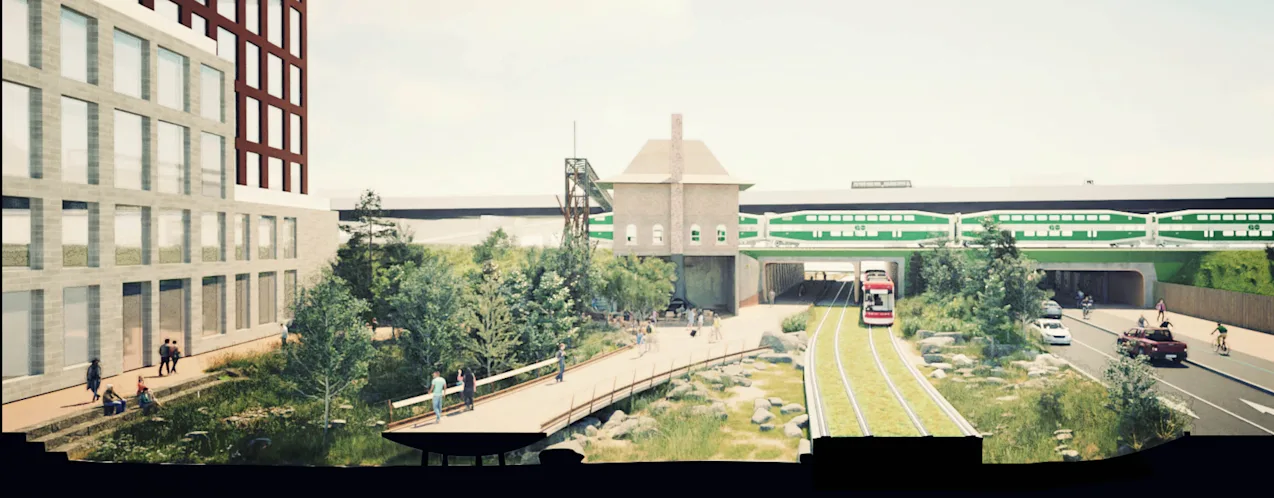
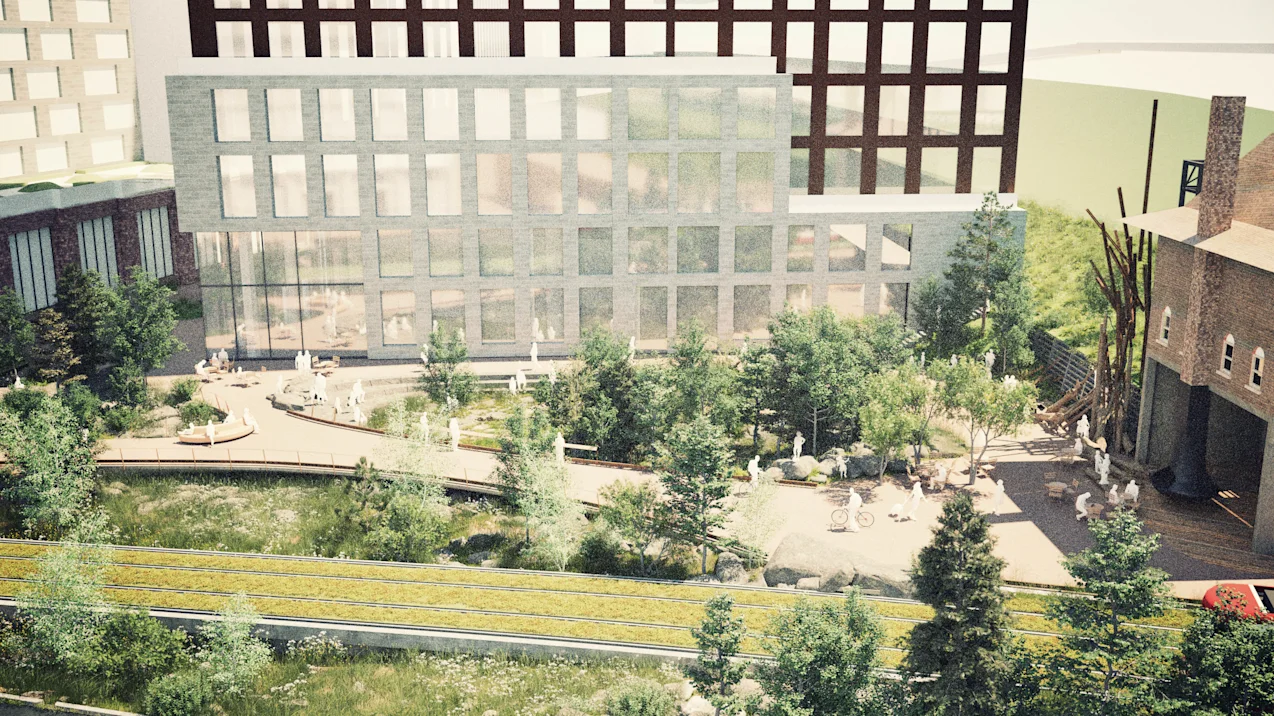
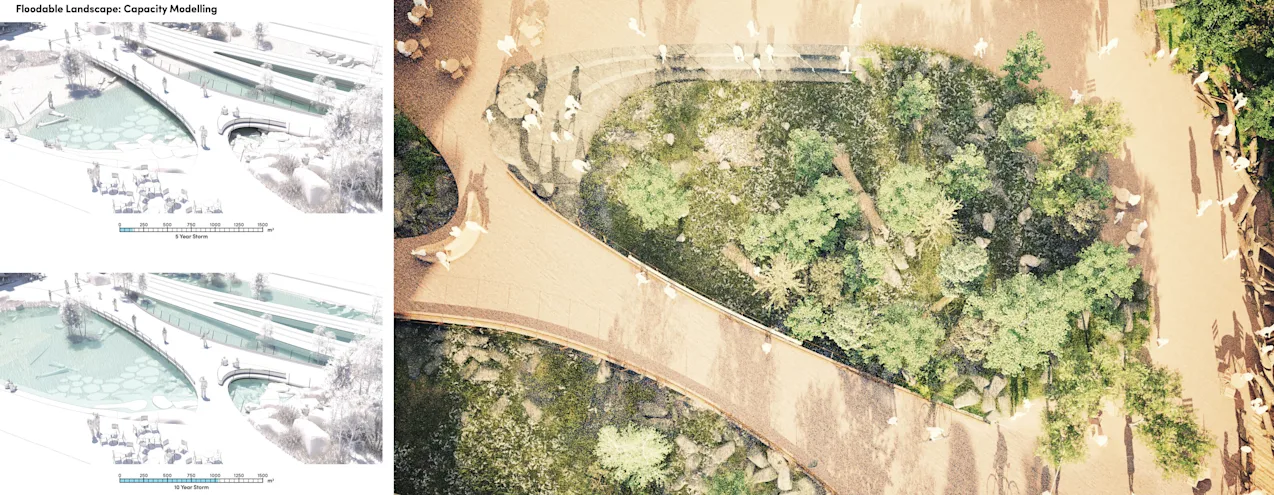
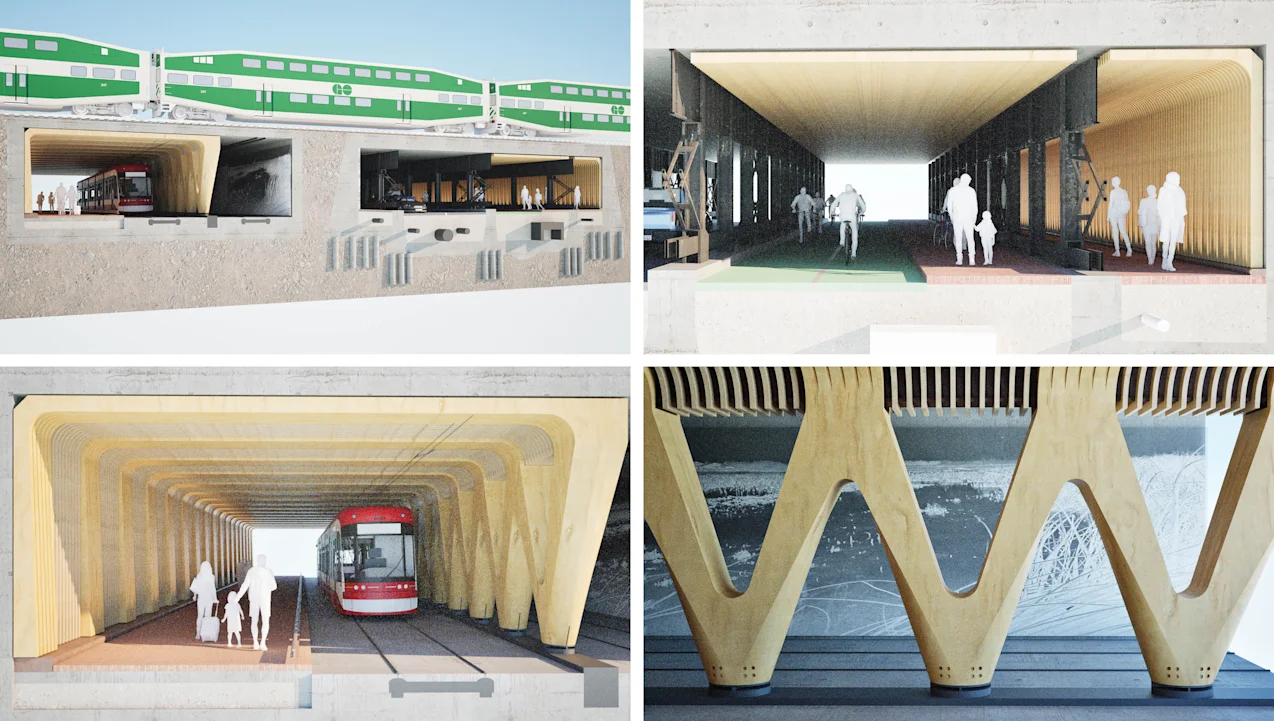
The addition of a new streetcar portal here necessitates an even lower elevation of Cherry Street at the existing rail berm, potentially intensifying pre-existing localized flooding issues. PUBLIC WORK is collaborating with Stantec to provide an innovative solution to the flooding dilemma while creating an ecologically rich public space inspired by its wetland origins, as a prelude to the transit portal. Cherry Marsh is a hybrid public space designed both as a community landscape as well as green infrastructure to absorb localized runoff, reduce flooding in the portal, and improve streetcar operational reliability during heavy rain.
The re-contoured landscape creates an urban wetland that showcases native shoreline plant ecologies, able to thrive within the dynamic environment of fluctuating water levels. An elevated brick promenade crosses the marsh, linking pedestrians to the eastern waterfront via the new transit and pedestrian portal and passing a refurbished, reactivated Cherry Street Signal Tower.
Cherry Marsh brings the historic Ashbridges Marsh full circle, merging contemporary concerns—resiliency, transit expansion, green infrastructure, and ecological services—with vibrant placemaking. PUBLIC WORK has identified, designed, and championed this hybrid approach, turning a typically overlooked gap between jurisdictions into a unique city-building opportunity.