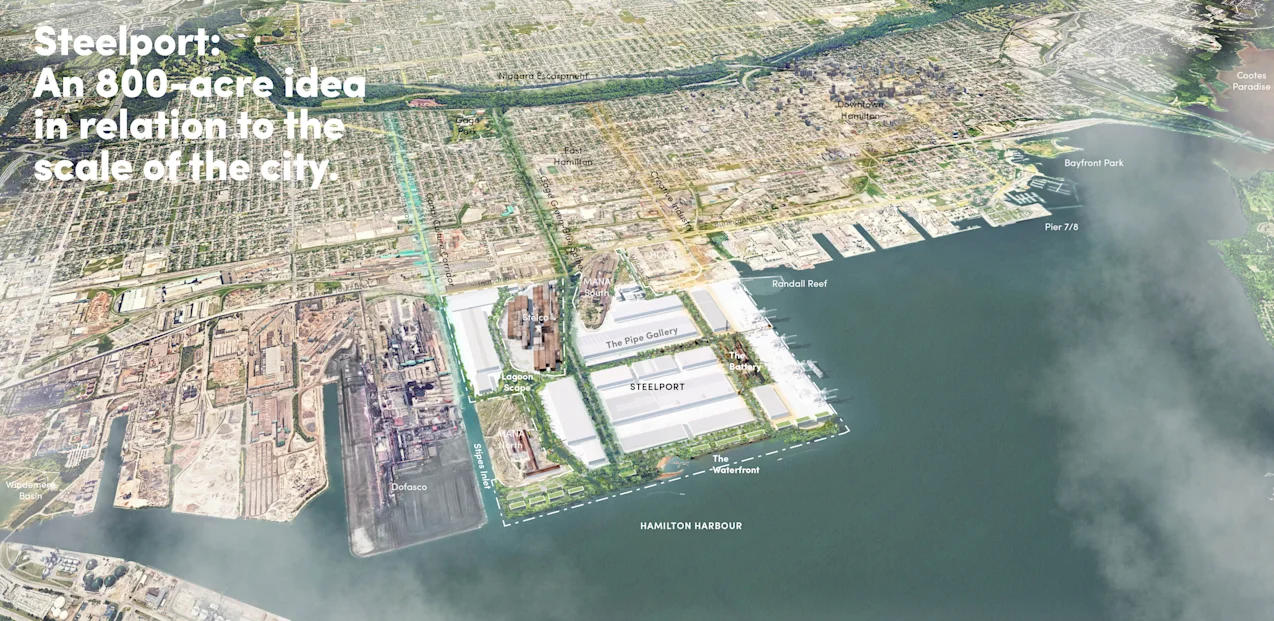
PUBLIC WORK’s vision for the transformation of 800 acres following the decommissioning of Stelco’s steel plant represents a generational opportunity for the City of Hamilton to restore its connection to the harbour and its cultural heritage. As the city evolves from its legacy as a centre of heavy industry into a modern, diversified economy, these extraordinary lands can support a distinctly Hamilton fusion of creative industry, community life, waterfront access, and ecological regeneration—while retaining the memory of what came before.
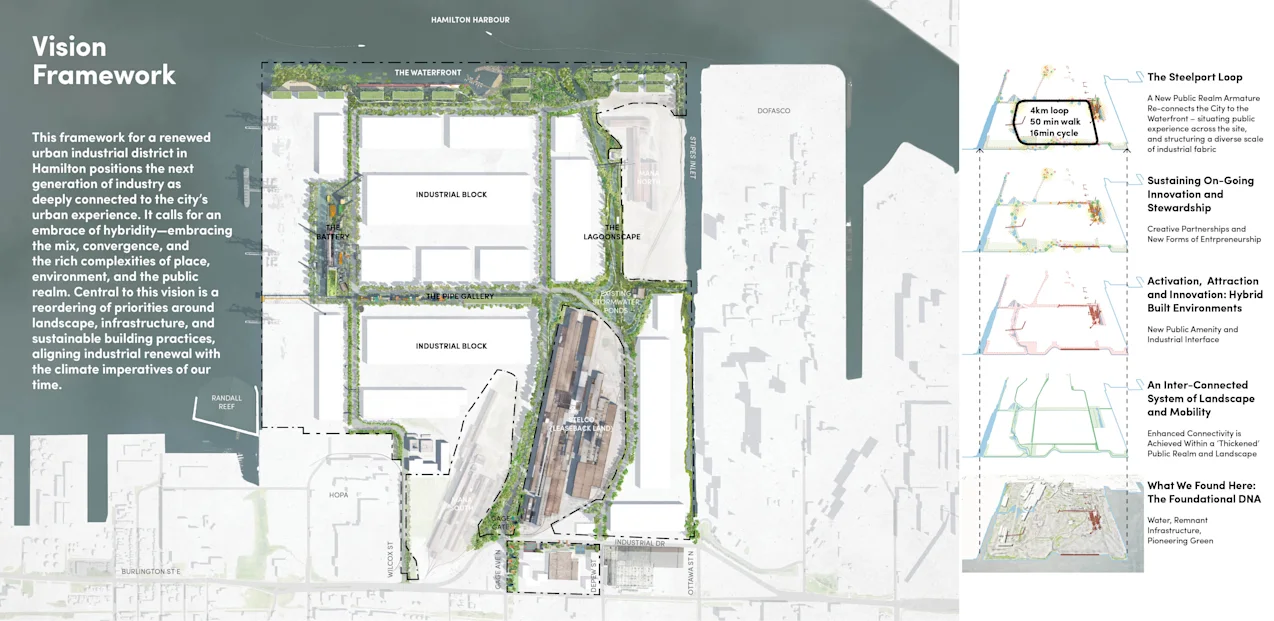
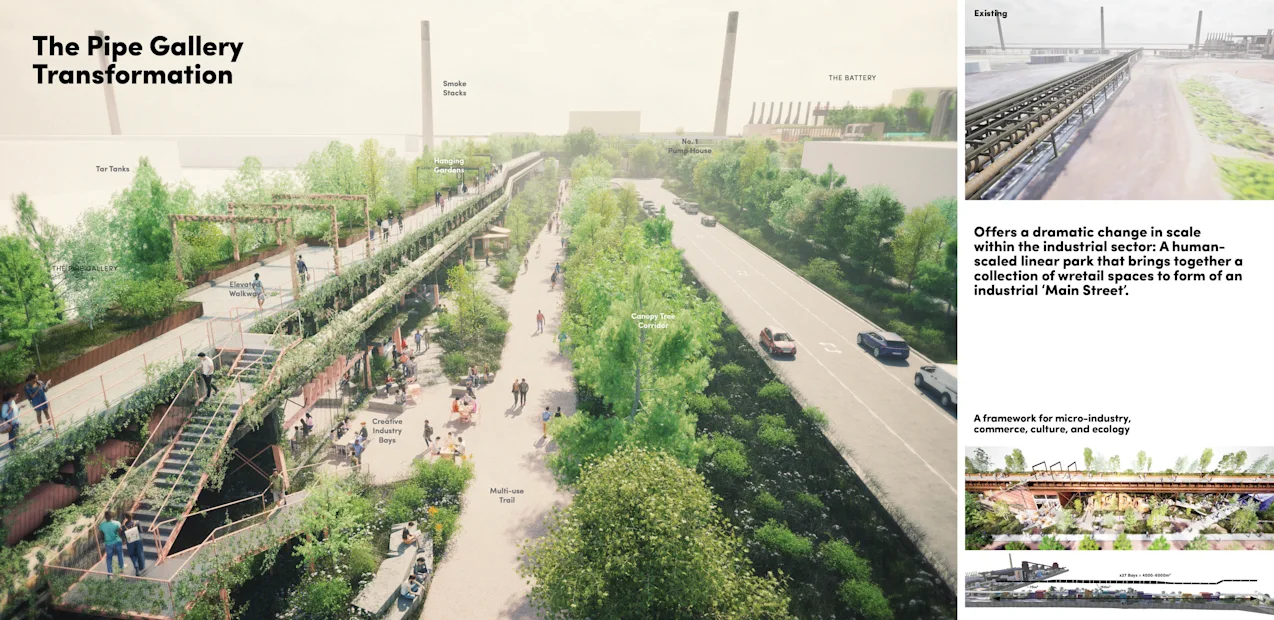
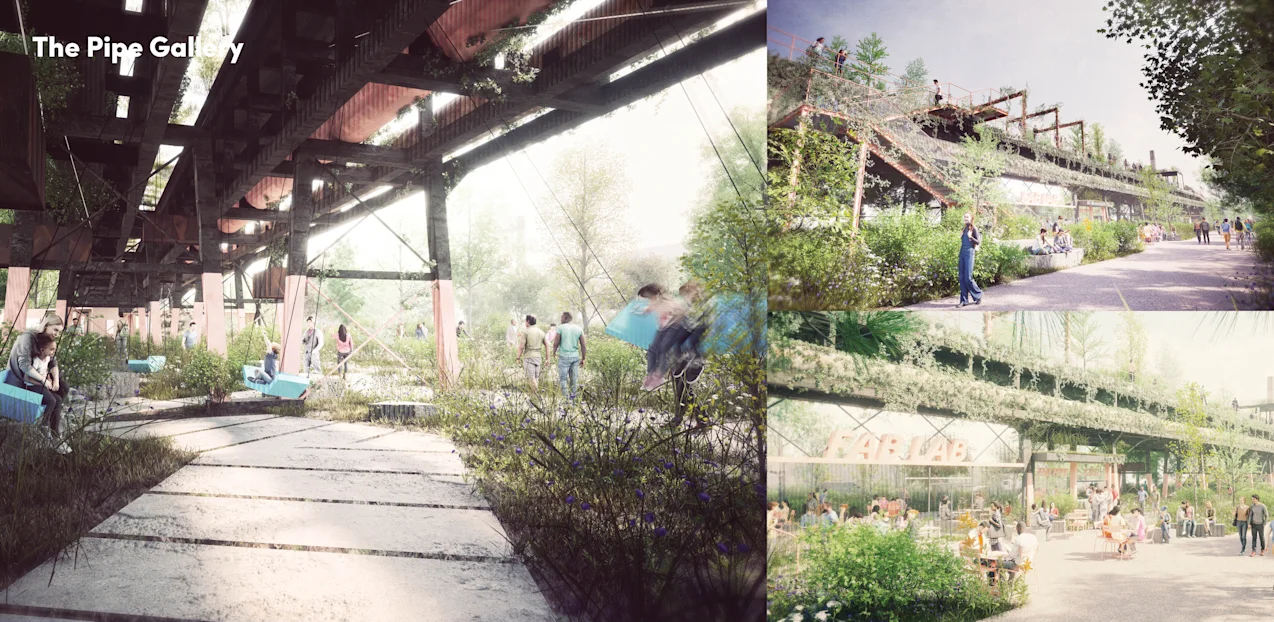
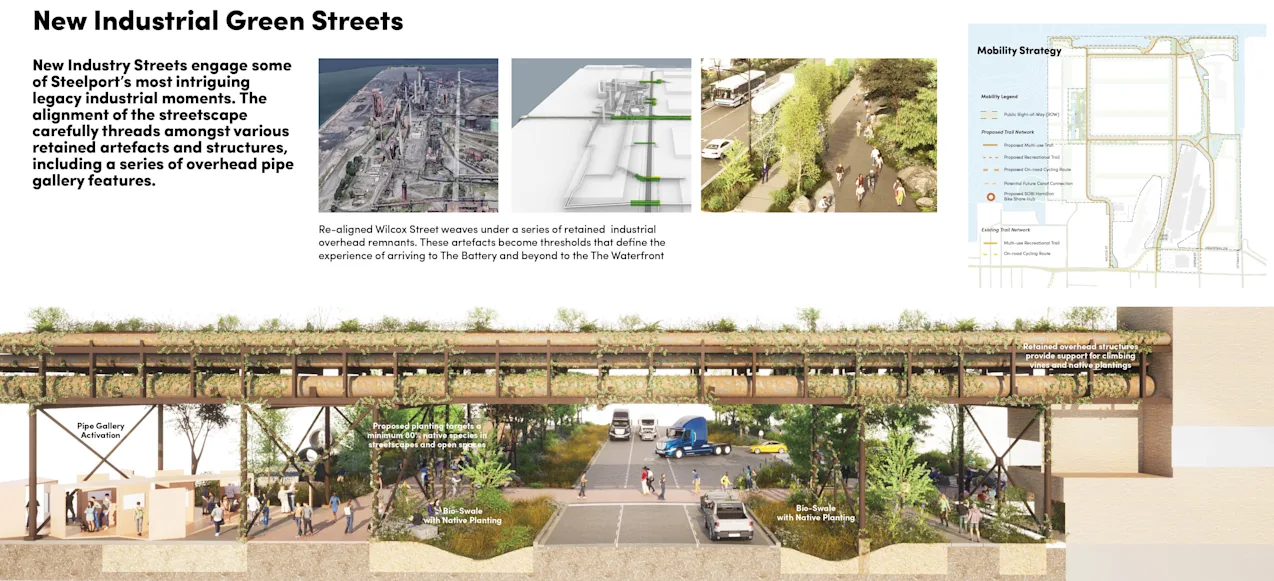
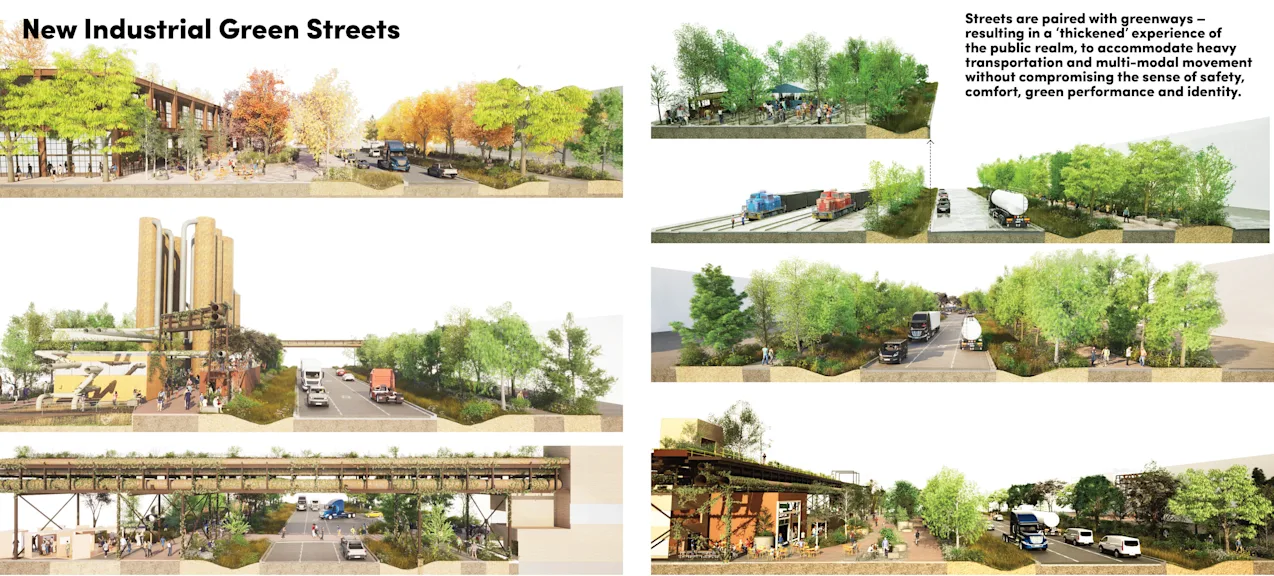
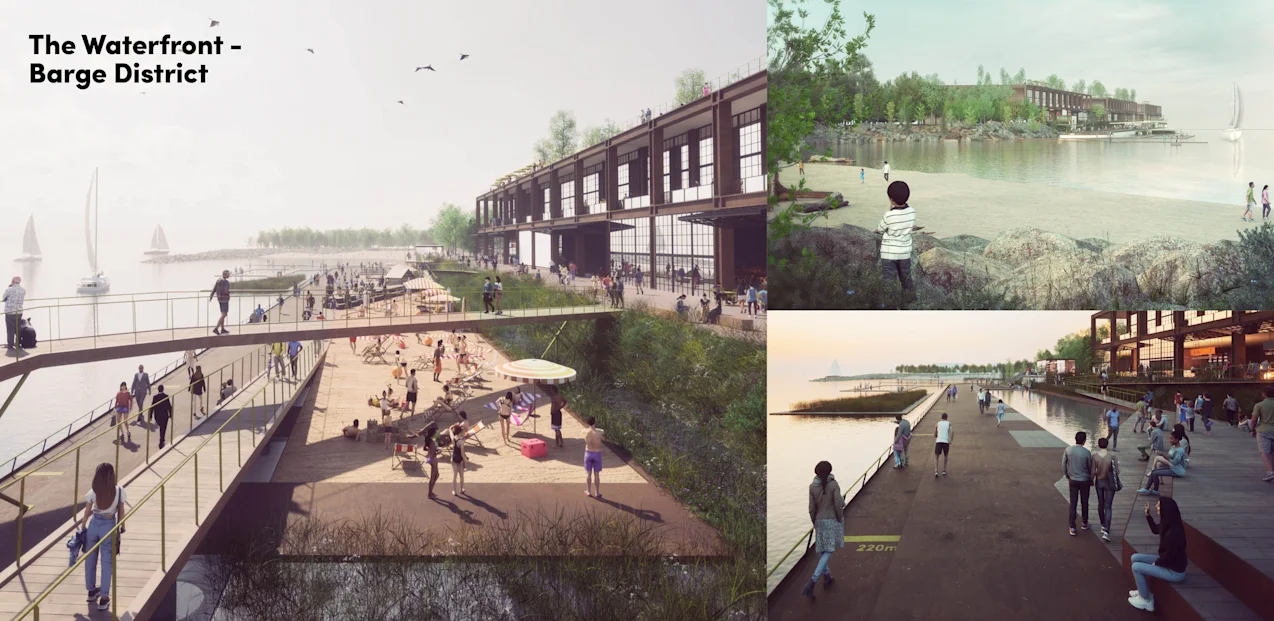
The public realm framework introduces immersive new experiences across this vast landscape, shaped by a dialogue between industrial heritage, nature, contemporary amenity, and ongoing production. This framework culminates in renewed public access to the waterfront along the north shoreline. An integrated network of public realm elements—including water systems, preserved industrial remnants, streets and greenways, amenitized open spaces, and ecological corridors—provides the foundation for a transformed experience of place that honours the site’s past while seeding new life for an evolving future.
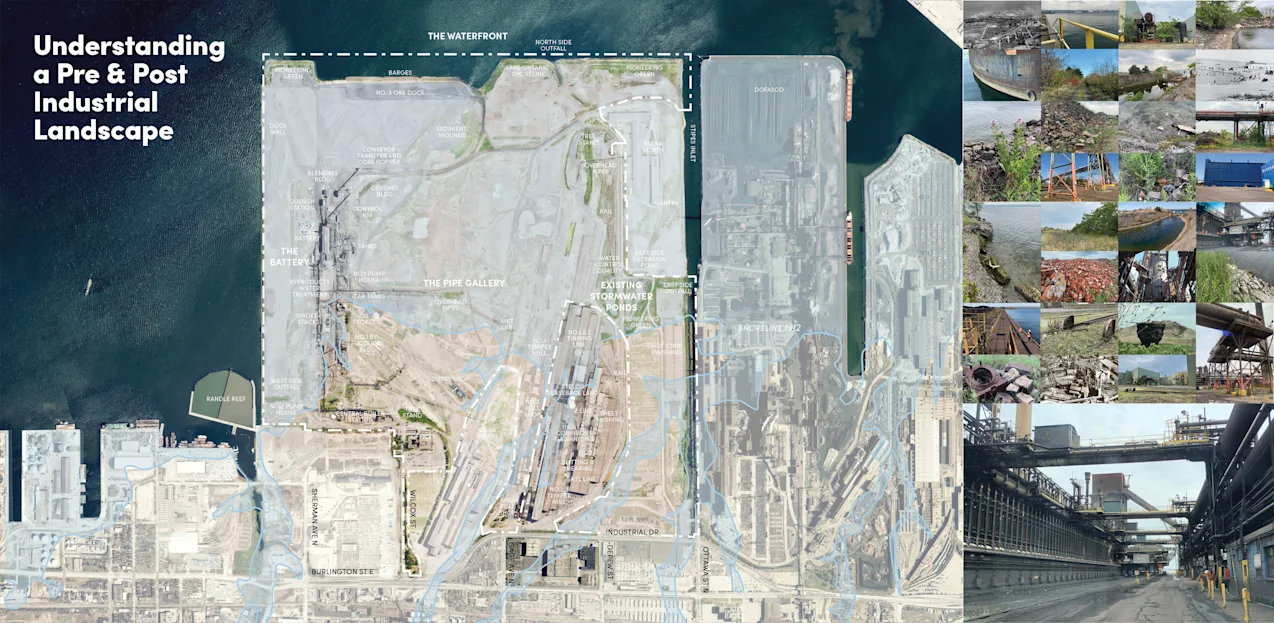
A deep understanding of the site’s evolution over time—including its pre-industrial landscape of indented shorelines, bays, and inlets, as well as its long history of industrial use—informs a renewed relationship to water, high-performing green infrastructure, and enhanced site connectivity. The discovery and celebration of remnant industrial artifacts guide an approach in which the site’s history becomes a catalyst for imagining its future public realm.
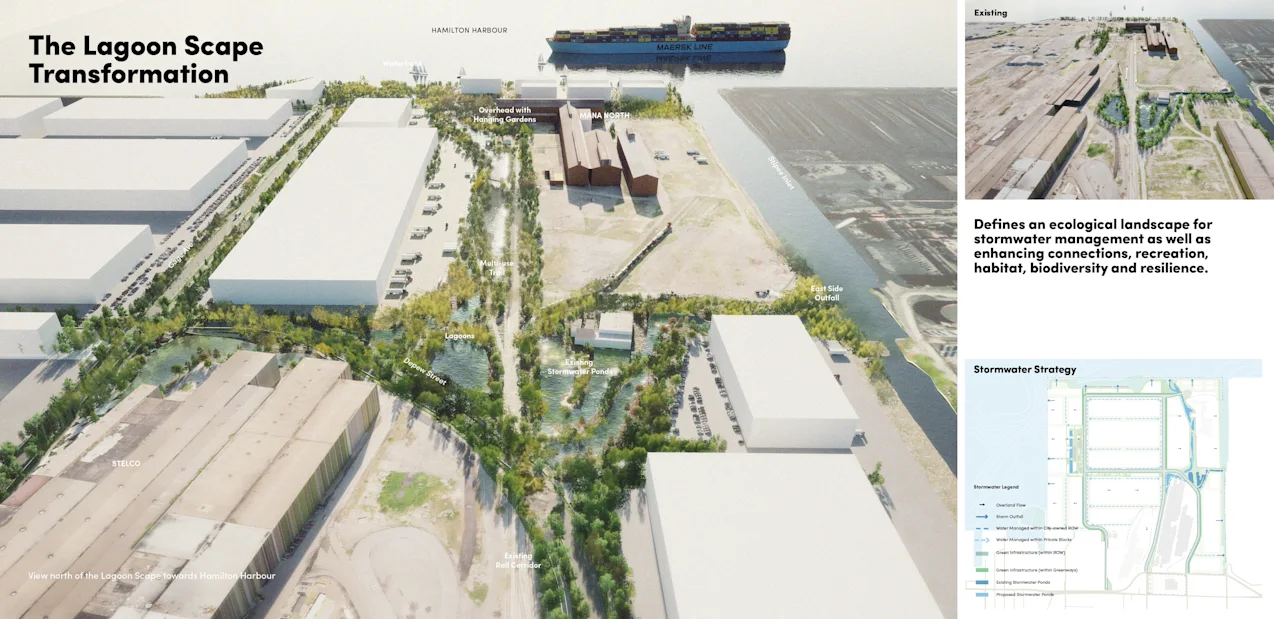
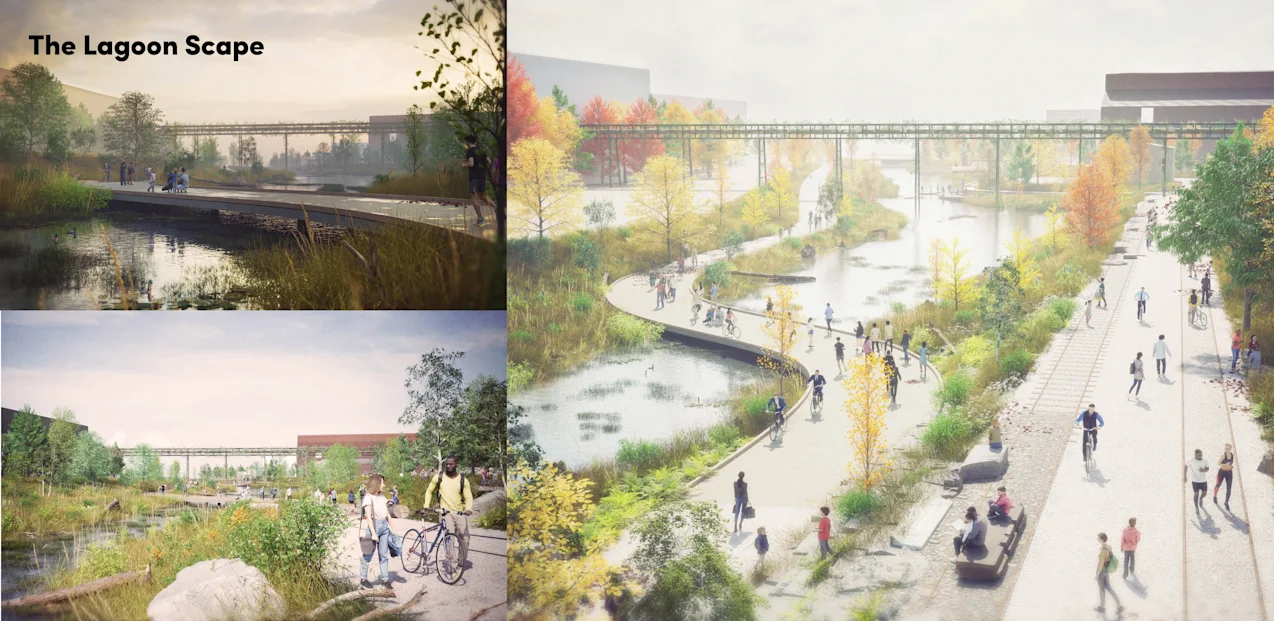
Water plays an expanded role within the landscape—simultaneously functional, ecological, recreational, and symbolic. A sequence of stormwater ponds integrated with blue-green infrastructure builds upon existing site lagoons to establish a significant ecological corridor in the eastern portion of the site, encompassing five hectares of integrated stormwater management. Extending north toward the bay, this lagoon system reflects the recovery of the site’s deep landscape history, creating a dynamic waterscape shaped by inlets, wetlands, and diverse habitats.
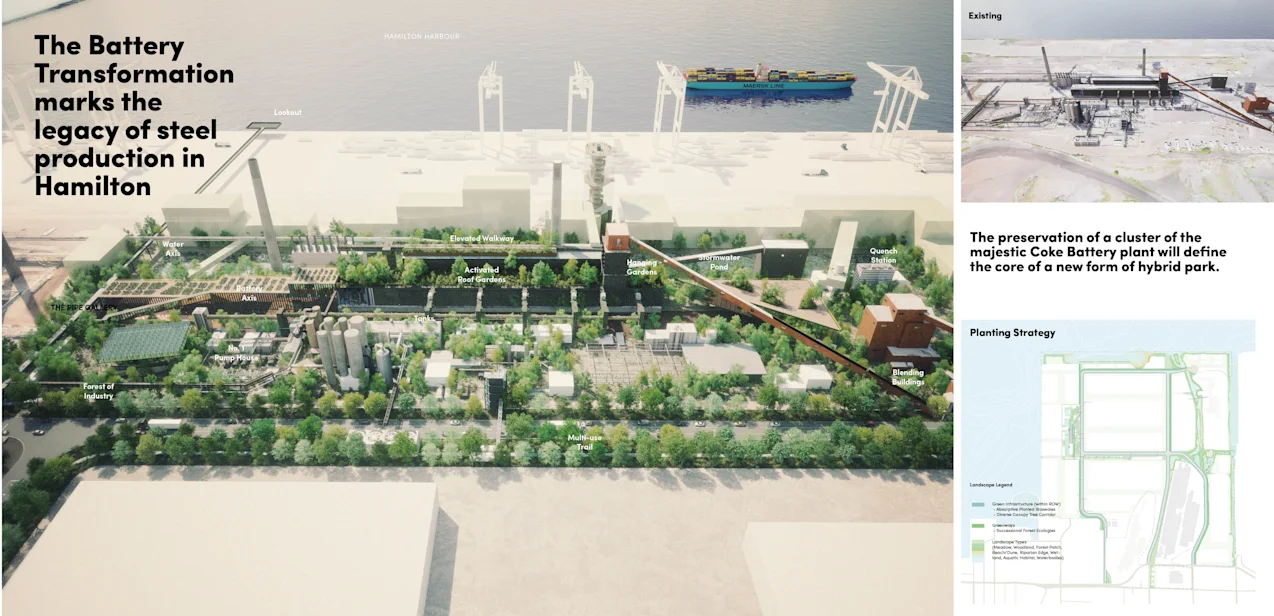
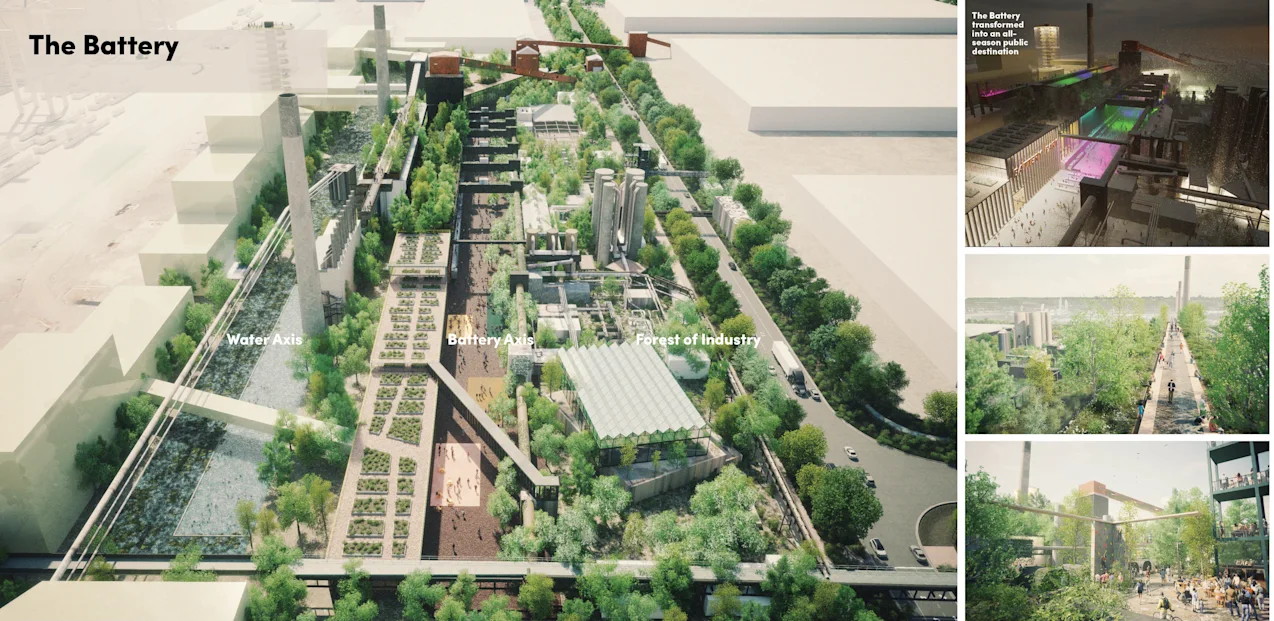
A collection of the site’s most iconic features is anchored by new public amenities, creating four distinct and memorable open-space destinations. These districts form the core public figure of the site, each blending water, industrial remnants, and contemporary programming in a unique way. Their arrangement enables a continuous loop that unites these destinations within a cohesive network, supported by streets and greenways that reconnect the site to the city’s broader mobility framework. The Steelport Loop establishes an ambitious model for hybrid partnerships, supporting long-term activation, stewardship, and operational success. At the heart of the site, the strategic preservation of Stelco’s monumental Coke Battery Plant structures defines a new form of hybrid park—bringing together old and new to catalyze future innovation, cultural production, and economic vitality.