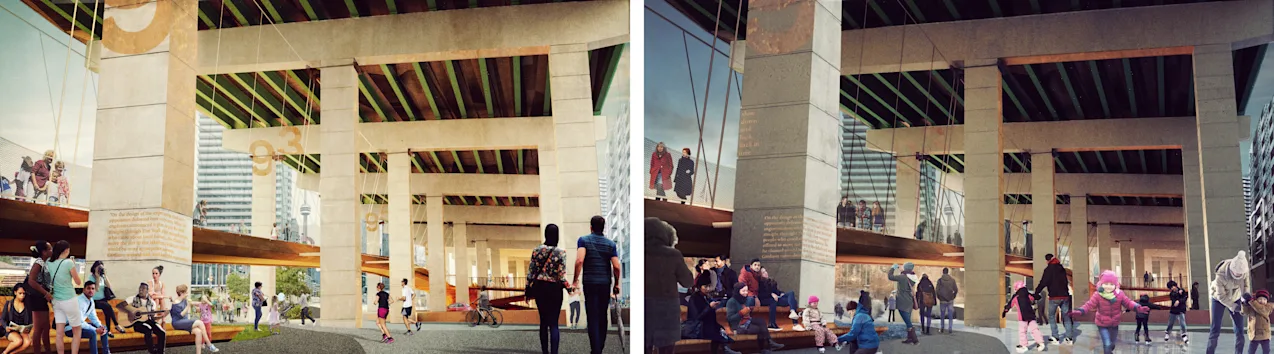
In keeping with the spirit of the overall Bentway project, The Bentway Bridge is working under and with the existing infrastructure of the Gardiner Expressway to ignite our civic imagination, and to inspire fresh perceptions about how we experience public life in the city.
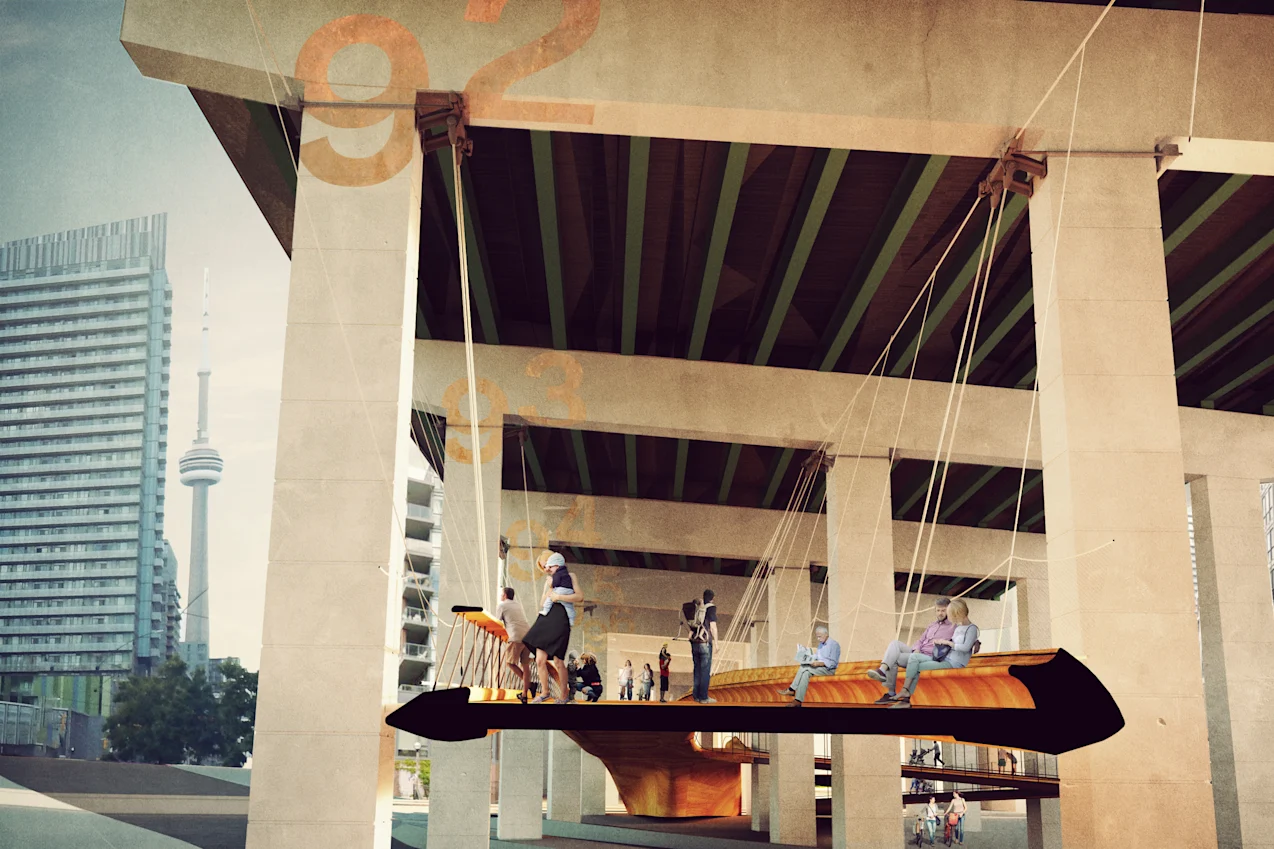
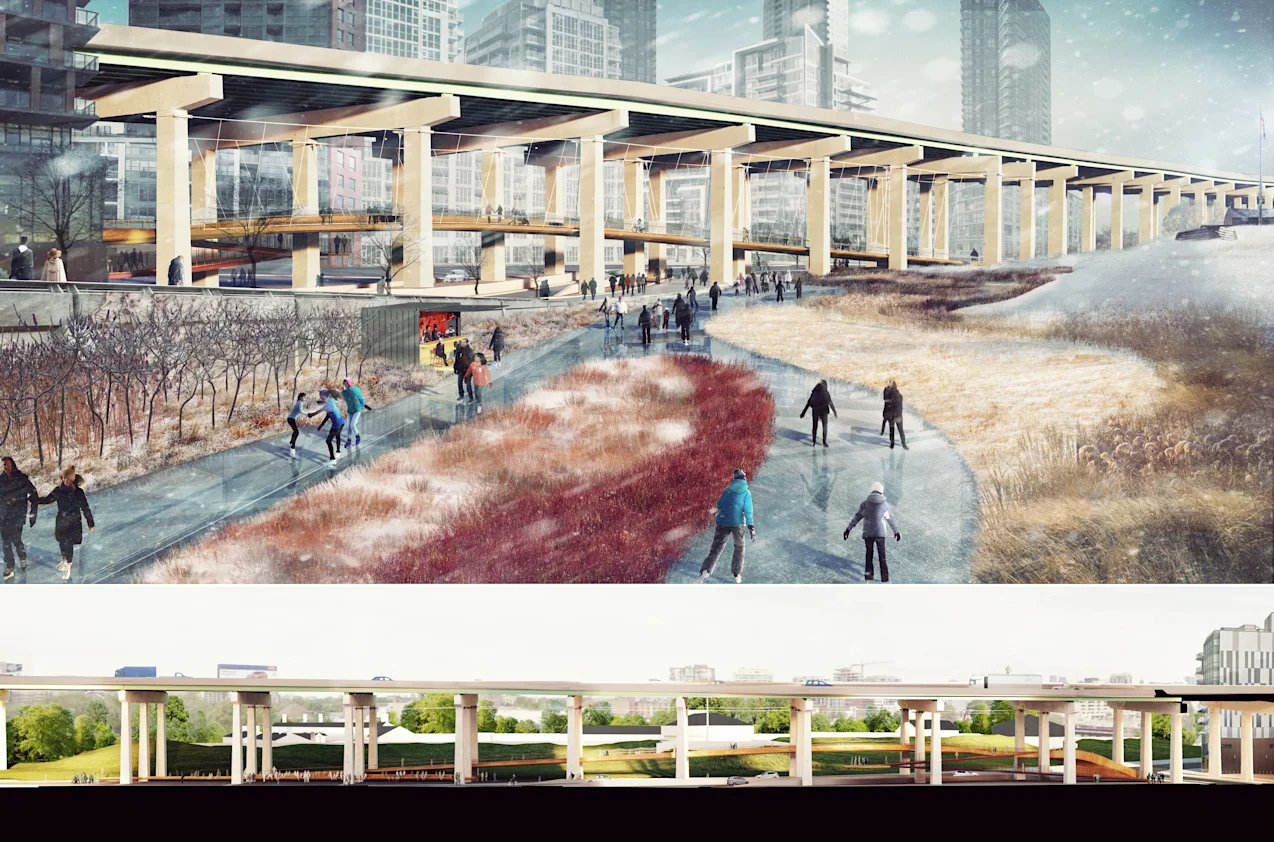
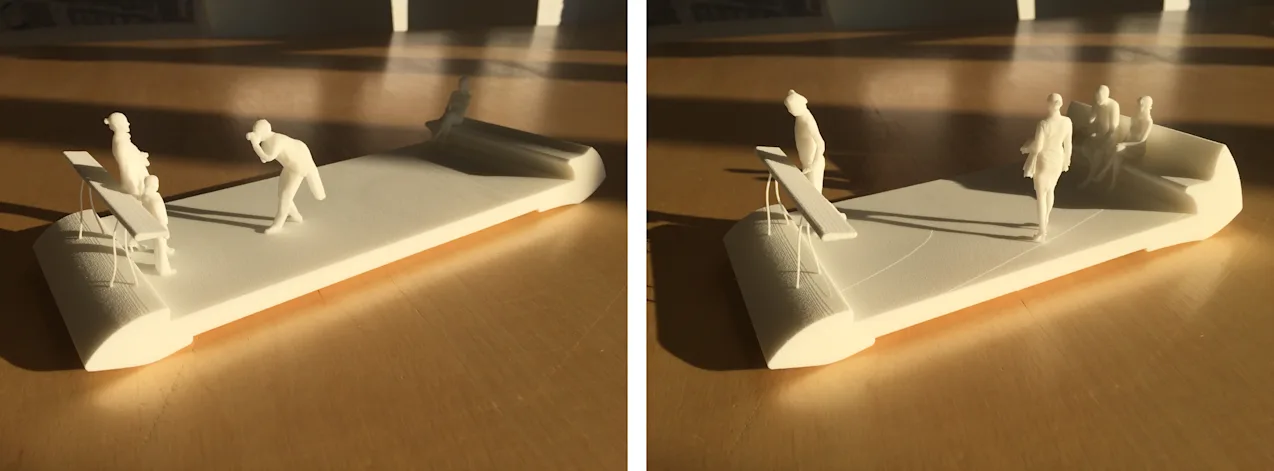
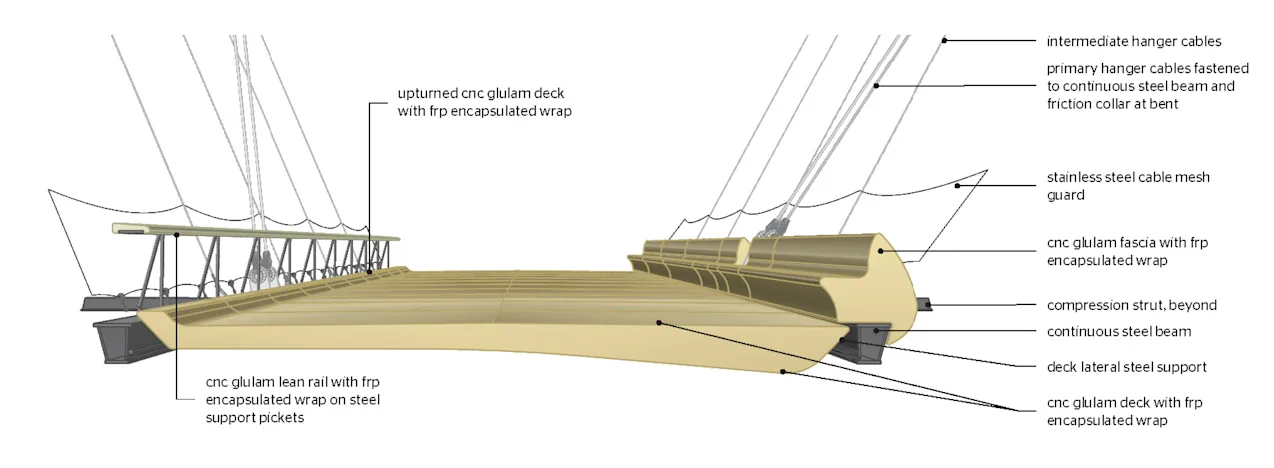
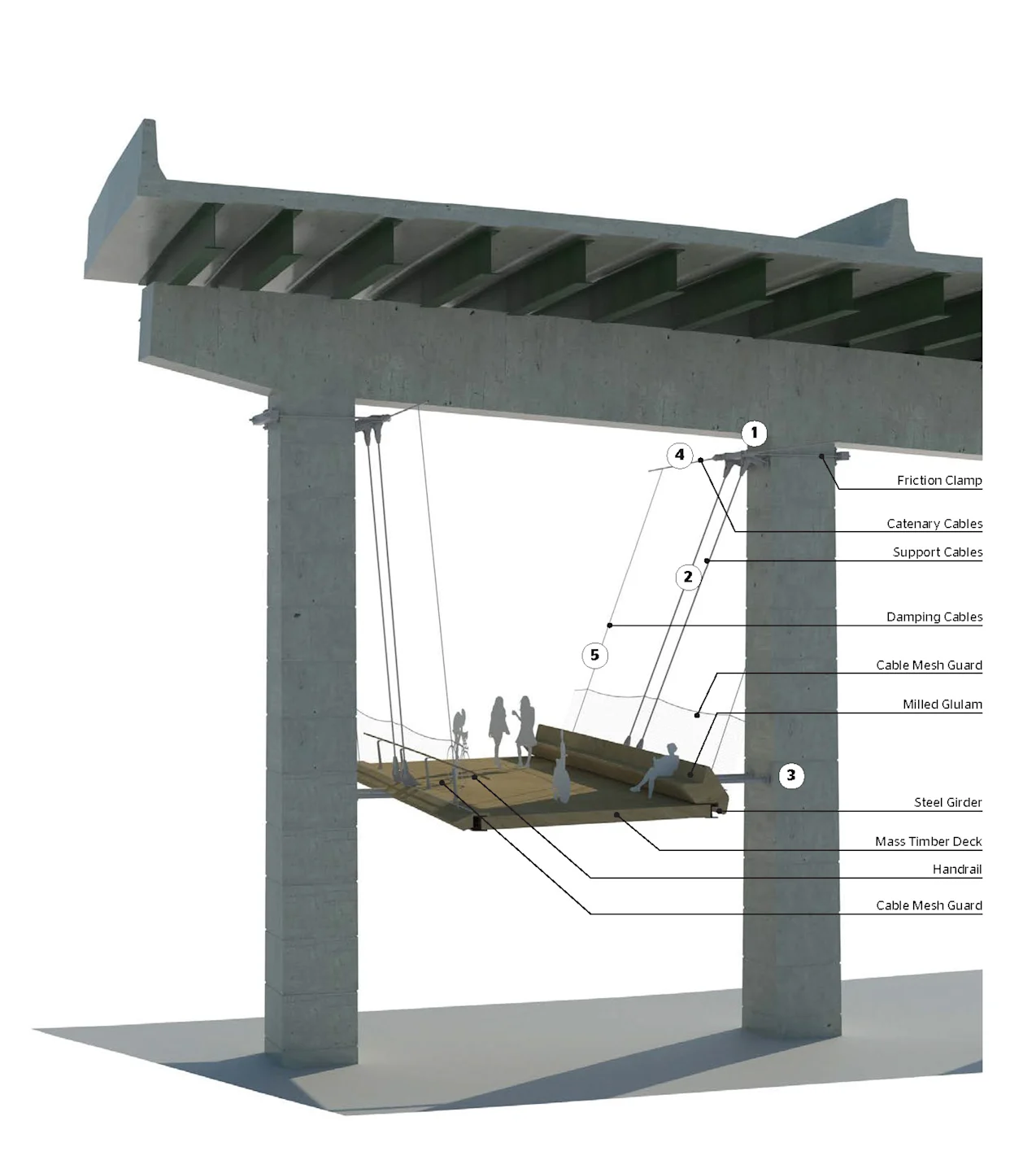
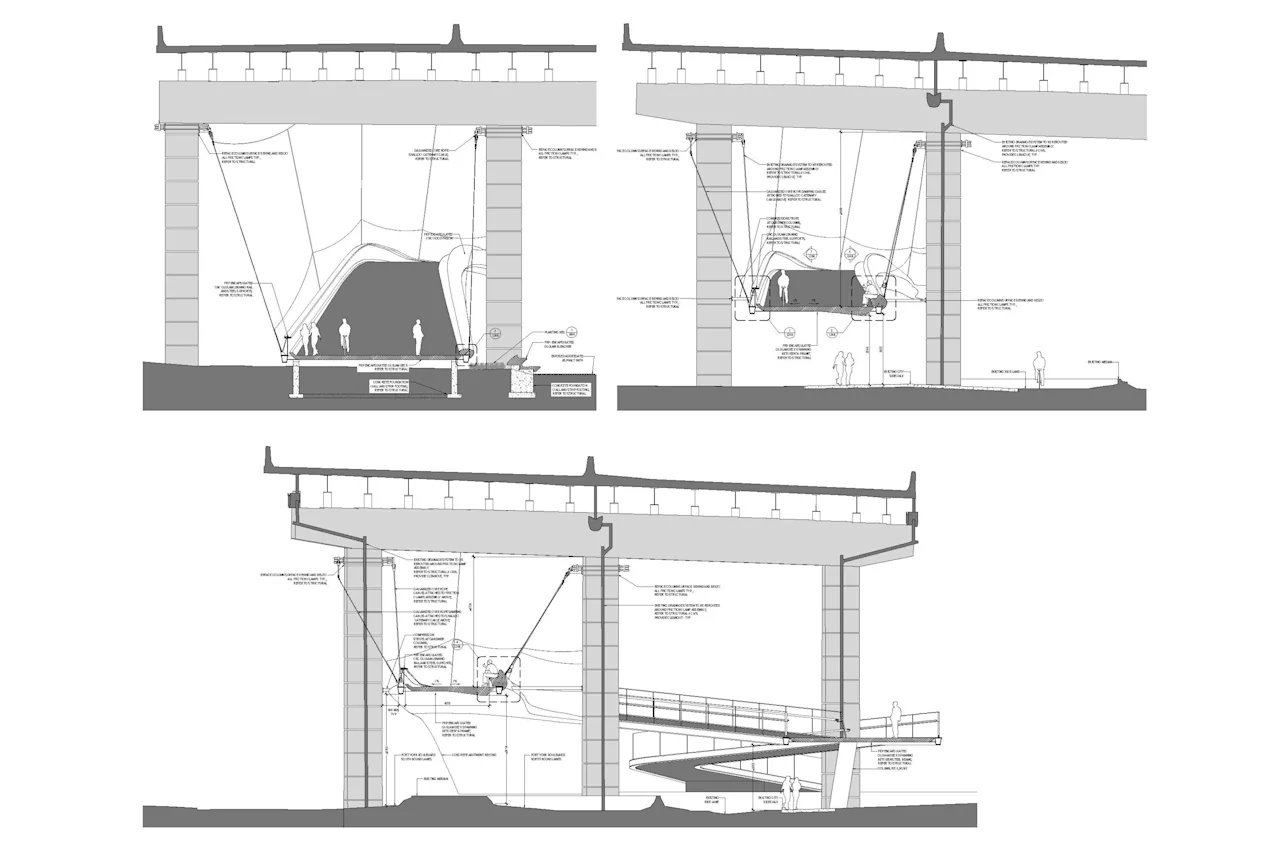
The suspended bridge crossing joins previously disconnected neighbourhoods together and weaves a continuous trail from end to end. This crossing stands apart from typical bridge designs because of its novel relationship with the existing Gardiner Expressway structure and for the experience it offers as part of its passage. By harnessing the excess structural capacity of the existing concrete bents, the new pedestrian bridge is suspended from the existing 20th century structure via a series of demountable friction-collars mounted from the existing columns. The bridge is constructed from an innovative fiberglass-encapsulated glulam timber system. The suspended timber crossing will provide a warm and organic contrast to the industrial aesthetic of the existing infrastructure, while carrying pedestrians and cyclists over Fort York Boulevard, treating them to airborne views of the Fort and promoting increased awareness of the National Historic Site.
The Bentway Bridge leverages what was always there, using the excess structural capacity of the expressway structure to suspend the bridge. This project could only happen now because of a genuine need to be resourceful, innovative and bold with how we share public space.